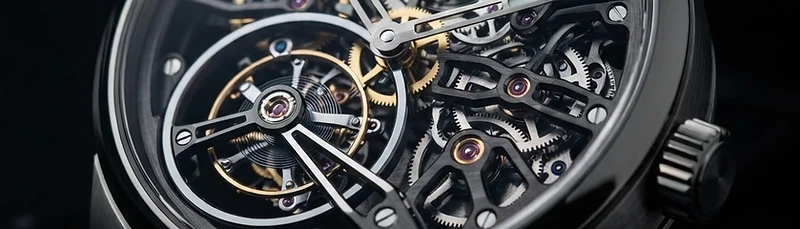
§ Heritage & Standards
Five Centuries,
One Standard
The watch on your wrist is the result of 500 years of obsession. Here is how that craft became what you wear — and how we make sure every piece we sell is worthy of it.
§ A Short History
Watchmaking began the moment time left the tower. Five centuries of mainsprings, balance wheels, rotors, and quartz later, the mechanical watch survives not as a tool but as the smallest mechanical art object a person can own.
The Nuremberg Egg
Peter Henlein crafts the first portable spring-driven timepieces — worn on a chain, they freed timekeeping from the church tower.
The Balance Spring
Christiaan Huygens applies the spiral balance spring, slashing daily error from minutes to seconds and birthing the precision era.
The Marine Chronometer
John Harrison's H4 solves longitude at sea — a watch accurate enough to navigate oceans, and the first true super-precision instrument.
Industrial Watchmaking
American and Swiss manufactures industrialise the movement, making reliable watches accessible — the beginning of the watch as a daily object.
The Waterproof Case
Rolex launches the Oyster — the first truly water- and dust-resistant wristwatch, proven by a Channel swim the following year.
The Perpetual Rotor
Rolex patents the self-winding rotor, the foundation of nearly every automatic movement made since.
Quartz & The Chronograph
Seiko's Astron goes quartz; Zenith debuts the El Primero automatic chronograph — the year horology split into mechanical art and electronic accuracy.
The Luxury Sports Watch
Audemars Piguet's Royal Oak proves a steel sports watch can command a precious-metal price — the template for every modern icon that followed.

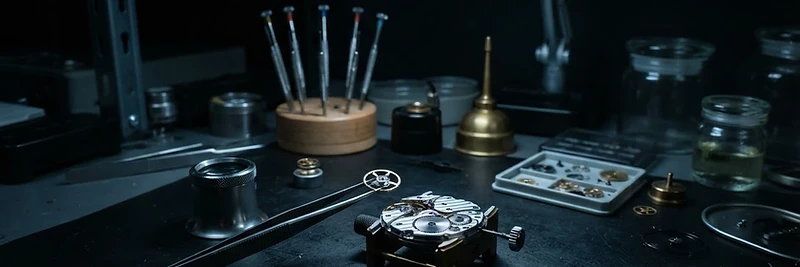
§ Our Standards
How We Source
A great history deserves a great gatekeeper. These are the six standards every watch must pass before it earns a place in the archive.
Provenance Trail
We trace each watch's chain of custody and reject any piece with a broken or unverifiable history. No grey-market mystery boxes.
Serial Verification
Case and movement serials are checked against lost-and-stolen registers and manufacturer records before a watch enters our vault.
In-House Authentication
Every watch is opened, inspected under loupe, and authenticated by our team — dial, hands, crown, case, and movement checked for originality.
Condition Grading
Each piece carries an honest in-house grade — Mint, Excellent, Very Good, or Good — so you know exactly what arrives, with no flattering surprises.
Movement Regulation
We verify timing against spec and regulate where needed. A watch that runs fast or slow never leaves the bench.
Documented Provenance
Every order ships with an in-house authenticity card recording serials, grade, and inspection date — your record, not just ours.
Built for Collectors
We only sell pieces we'd wear ourselves. If anything about your purchase isn't right — authenticity, condition, or fit — message us on WhatsApp at +44 7466 919967 and we'll make it right.